




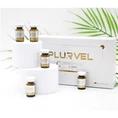
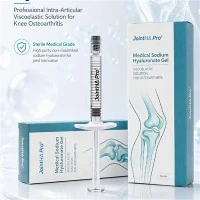


What Are Hyaluronic Acid Fillers
Hyaluronic acid is a substance naturally present in the body and therefore very well accepted and tolerated when it is injected (synthetic hyaluronic acid). It induces volume and improves the hydration and elasticity of the injected area. Hyaluronic acid fillers have become popular soft tissue filler augmentation agents over the past several years. They have helped revolutionize the filler market with a number of new products available for use for our patients.
Advantages of Hyaluronic Acid Fillers
Natural composition
Hyaluronic acid is a naturally occurring substance found in the human body, primarily in the skin, eyes, and joints. Its natural composition means that the body accepts it well, reducing the risk of allergic reactions or rejection.
Biocompatibility
The excellent biocompatibility of hyaluronic acid fillers allows them to blend seamlessly into the surrounding tissue. This results in a smooth and natural-looking outcome, rather than an artificial or unnatural appearance.
Versatility
Hyaluronic acid fillers can be used in various areas of the face and body, including the lips, cheeks, nasolabial folds, and even for wrinkle correction. Their versatility makes them a versatile tool in the aesthetician's arsenal.
Long-lasting results
While the duration of the results depends on individual factors such as age, skin type, and lifestyle, hyaluronic acid fillers typically provide long-lasting results. This means that patients can enjoy their refreshed appearance for several months or even longer.


Why Choose Us
High quality
Our products are manufactured or executed to a very high standard, using the finest materials and manufacturing processes.
Advanced equipment
A machine, tool or instrument designed with advanced technology and functionality to perform highly specific tasks with greater precision, efficiency and reliability.
Professional team
Our professional team collaborates and communicates effectively with each other, and is dedicated to delivering high quality results. We are capable of handling complex challenges and projects that require our specialized expertise and experience.
Customized services
We understand that each customer has unique manufacturing needs. That's why we offer customization options to cater to your specific requirements.
Competitive price
We offering a higher-quality product or service at an equivalent price. As a result we have a growing and loyal customer base.
24H online service
We try and respond to all concerns within 24 hours and our teams are always at your disposal in case of any emergencies.
Importance of Hyaluronic Acid Fillers
The hallmark of the aging face is loss of associated subcutaneous volume over time. Clinically, with this loss, one commonly finds the signs most clinicians see routinely when confronted with a patient concerned with the aging face – an increase in facial vasculature and pigment alterations, as well as an increase in the lines and wrinkles of the skin. This is associated histologically with a thinning of the epidermis and with dermal atrophy and loss of the elastic tissues present within the dermis and with actinic changes with loss of dermal collagen. The treatment for this change over time can be multiple, from skin care products, to energy based therapies (lasers, light sources, and radiofrequency devices) to fillers and toxins. HA fillers play an integral part in the correction of changes associated with aging; especially those associated in the lower one-half of the face, from the nasolabial folds, to the vertical lip lines of the lips, the marionette lines around the mouth, and in the thinning of the lip itself. They also can be used for volume enhancement of the cheeks. The concept of an ideal filler has been debated for a number of years. Without question, everyone wants the ideal filler to be easy to inject, produce reproducible results, and have longevity (lasting between 1 and 2 years). Further, the ideal filler would be painless on injection and nonallergenic (no skin tests required), noncarcinogenic, nonteratogenic, and we would expect it not to migrate once injected into the skin. We would like the ideal filler to be stored at room temperature, have a long shelf-life, and be free from all transmittable diseases. Further, we would want this ideal filler to have few, if any local adverse events, and be affordable to both the patient and the physician.
The Main Differentiators for Hyaluronic Acid Fillers
The main differentiators for HA fillers are: source of HA; concentration of HA in each syringe being utilized; the particulate size of the HA; whether the HA is cross-linked; the type of cross-linking agent used in the HA; whether the HA is monophasic or biphasic; and whether there is an anesthetic in the HA syringe. The HA source for the available fillers are either avian, that found primarily in rooster combs, or from bacteria-sourced HA, mainly from the synthetic fermentation of the Staphylococcus equine bacterium. This latter source has become more popular recently because of potential allergy to the avian source owing to a high avian protein content, and because the bacterial-derived HA products are more pure, more viscous, and not derived from an animal source. The concentration of HA fillers is also important. Those HA fillers with higher HA concentrations displace more tissue and are felt to equate to longer duration of effect. Those HA fillers with concentrations of 20 mg/g or more of HA are now considered ideal. All HA fillers utilize a single ether cross-link bond to stabilize the product. The newer non-particulate HA fillers are either double cross-linked, multi crossed-linked, or monophasic gels. They are cross-linked with a single ether bond and have their long chains of HA bound to 1,4-butandiol diglycidylether (BDDA) as well as having the shorter HA chains bound to the network, also with BDDA. The resulting homogeneous mass becomes potentially less resistant to degradation, making for a longer-lasting HA filler. As a result of these processes, and because these newer gels are non-particulate in formation, they require a higher HA concentration for the duration of effect. The cross-linking of HA is required to prevent biodegradation from free radicals and enzymes and to increase the HA filler duration. A newer agent, 1, 2, 7, 8-diepoxyoctane, may further enhance duration. Larger HA particles tend to last longer and are usually used for deeper dermal injections and defects. Monophasic HA fillers are cohesive gels rather than just HA particles. Biphasic HA fillers are made into particle form. Each form has proponents – monophasic HA fillers may last longer and may not migrate after injection.
Volume and Wrinkle Treatment with Hyaluronic Acid Fillers
The aging process in the face is particularly evident in the loss of volume on the cheeks, wrinkling of the nasolabial fold, sunken rings under the eyes or thin lips. The fresh, radiant and plump appearance decreases due to the reduction of the skin's natural hyaluronan depots. Fortunately, nature can be helped a little here. Due to its high water-binding capacity, the hyaluronic acid filler is perfectly suited to counteract skin aging. It works wonders, not only padding the skin by binding water, but also supporting collagen and elastic fibres and stimulating their reproduction. We use only high quality hyaluronic acid fillers. These have an effective duration of up to one year or even longer, depending on the region treated. The anti-aging effect is maintained if the treatments are repeated at regular intervals. Before treatment with hyaluronic acid fillers, your doctor should inform you in detail about the filler. Blood-thinning medication should be discontinued if possible to minimize the risk of bruising. The injection sites must be thoroughly disinfected before treatment. The filler is then injected with a blunt cannula or fine needle. If you are sensitive to pain, an anaesthetic cream can be applied beforehand. This can be collected from our practice at any time to shorten the waiting time. Furthermore, the injection sites can be pre-cooled with a cold pack. The effect is immediately visible, but the skin is still a little swollen at the beginning. After about 2 weeks the final result is achieved.
Precautions for Hyaluronic Acid Fillers
Injectable hyaluronic acid (HA) is a type of temporary dermal filler. Hyaluronic acid is found naturally through out the body, with the highest concentrations in the joints, eyes, and skin. In the skin hyaluronic acid attracts water, which allows the skin to become more hydrated. As we age, the fat, muscles, bone, and skin in our face begins to thin. This loss of volume leads to either a sunken or sagging appearance of the face, fine lines, wrinkles, folds, and thin lips. Injectable HA is used to reduce the appearance of fine lines and wrinkles, facial folds, and to create structure, framework, and volume to the face and lips. The effects of injectable hyaluronic acid are seen immediately. Outcomes and longevity vary from patient to patient and are influenced by the location of the injection, the individual properties of the hyaluronic acid filler, the age of the patient, and the individual characteristics of the patient's skin. For example, results in the lips may last 6 months, but those in the nasolabial folds may last 9-12 months or longer. After that time, additional injections are required to maintain the desired effect. Your doctor will evaluate the areas of your face and/or lips needing improvement in lines, structure, and/or volume. Topical or injection numbing medication may be used for added comfort prior to your procedure. Areas to be treated should be kept clean. If there is a skin infection, then treatment needs to be postponed until it resolves. Patients who take blood thinners (such as aspirin, ibuprofen, certain herbal medications) should stop them two weeks prior to injection with the approval of their prescribing doctor.
Is Hyaluronic Acid Fillers Painful?
As the years go by, the face reflected back to us in the mirror sometimes becomes less and less recognisable. Furrows, wrinkles, thinning lips and loss of volume alter our appearance. Fortunately, there is a rather simple way to reverse these unwanted changes or even correct a perceived cosmetic flaw that has been bothering you for years: hyaluronic acid (HA) dermal fillers. They are a popular and remarkably safe solution within the field of aesthetic medicine. So, if you are looking to add volume, improve the appearance of scars or combat the signs of ageing, this treatment option can offer excellent immediate results without the inconvenience of social downtime when performed by a suitably qualified medical specialist. Topical numbing agents or anesthetic injections can be used to improve patient comfort during the injection process. Also, lidocaine is commonly incorporated into most brands of HA fillers for further comfort measures. Before and following treatment, ice may be given to ease discomfort and swelling. Hyaluronic acid, also known as hyaluronan or HA, is a molecule that occurs naturally in our bodies. It not only renews skin tissue, but also supports healthy cartilage and joint function. Unfortunately, with age and exposure to sun and pollution, HA levels in the body decrease significantly. However, it is possible to artificially synthesise this miraculous little molecule, which is now being leveraged by the aesthetic industry to enhance facial volume and reverse the signs of ageing. Different methods and filler types may be used, depending on the area that requires treatment and the results you are hoping to obtain. A thicker (more viscous) filler is usually most effective in adding or restoring volume, while a thinner (more fluid) filler is generally more suitable for correcting fine lines and wrinkles. The filler is injected into the superficial, middle or deep dermis, most commonly using the point or multi-puncture technique, which involves administering several small injections close to one another instead of injecting all of the product at once.

The first results are virtually instantaneous, and you will already be able to notice them while you're still at the clinic. Facial volume will be restored and the firming effect of the fillers will bring about visible rejuvenation, all without looking unnatural or overdone. We recommend that you avoid any excessive or strenuous activity for 24 hours and that you resume sport the next day. In the 5 days following your treatment, the results will continue to improve as any potential bruising or swelling subsides and the injected hyalutonic acid molecules progressively increase volume. You'll then be free to fully enjoy the compliments on your beautifully relaxed and rejuvenated appearance. Hyaluronic acid fillers are absorbable and, depending on the area being targeted and on the product and technique used, last an average of 8 months to 2 years. However, this may vary due to factors such as age, skin type, lifestyle and genetics. The skill and expertise of the practitioner and the type of filler selected are also key to the treatment's success.
Injectable fillers are the rising stars of the plastic surgery world. They're quick, convenient, and the results are instant. Fillers have gotten so popular, in fact, that there are now more formulas available than ever before. Most fillers are composed of hyaluronic acid (HA), a "sugar" found naturally in the skin that is responsible for hydrating and plumping up the tissues. Different HA fillers may be made from the same substance, but they behave very differently under the skin. Plastic surgeons love being able to customize treatments for their patients and patients love the results that HA fillers deliver.Hyaluronic acid fillers work by reintroducing a natural substance into the skin that tends to decline with age. The HA molecules in the fillers attract water and help to replace volume that is lost as we age. They can also improve the appearance of naturally thin lips by increasing volume and adding contour. HA fillers are always temporary, but they are typically long-lasting and allow patients to schedule touch-ups only once or twice a year on average.One of the most striking variations between different HA fillers is the weight and density of the HA molecules in the formula. Some fillers use molecules of all the same weight, while others combine them to make the gel act a little differently. These differences in molecular weight might seem insignificant, but they can influence how long a filler lasts and how well it does its "job" of replacing facial volume. The number of particles per cubic centimeter of the product determines how thick the gel will be, and the molecule size affects how the HA behaves and how long it lasts. Basic fillers last around 4-6 months. Newer fillers, however, use cross-linking and can last for up to 18 months or longer. Density and molecule size make a difference in how long fillers last. Fillers in high-movement areas are specifically designed to withstand additional movement, for instance.
Our Factory
URWAY has been focusing on the field of medical aesthetics for many years, and has been committed to the development, production and sales of PDO thread and hyaluronic acid. URWAY has its own independent brands - MIYADERM (dermal filler), MIYALIFT (PDO thread) and MSMIYA (skin care). In addition, the company also operates a variety of beauty equipment and other related products. URWAY has been adhering to the principle of "high quality, excellent service". Create a one-stop shopping experience. The company operates to the highest regulatory standards and complies with local and international directives. Products have the most advanced sterilization technology and strict quality assurance. Now URWAY has a stable and mature global market network and a large number of loyal consumers.


Certificate

FAQ
Hot Tags: hyaluronic acid fillers, China hyaluronic acid fillers manufacturers, suppliers, factory, Cross Linked Hyaluronic, Dermal Filler, Acido Hialuronico Injetavel, Meso Fat Dissolve Injection


